Picture the first ten minutes of a company holiday party. People arrive in small groups, head toward the bar, spot coworkers across the room, and decide whether to find a seat or keep mingling. Before anyone notices the centerpiece, they are already experiencing the lighting, layout, and atmosphere of the room.
That is why good corporate holiday decor is about more than what you add to a venue. It is also about how the space feels once people are actually in it.
Start With the Room You Already Have
Some rooms arrive with plenty of personality. Others give you more open space to shape.
At The Ruins, richly layered interiors, fireplaces, and an eclectic atmosphere already create a strong visual setting. Holiday decor can build on that character, or you can go with very little decor and still enjoy a fully-dressed space.
SoDo Park offers a very different canvas. Its soaring ceilings, exposed beams, and open floor plan can carry larger lighting moments and more flexible layouts.
That contrast is useful when looking at holiday and Christmas party venues. Instead of beginning with a list of decorations, notice what the room is already doing well. A dramatic interior may need restraint. A large industrial space may benefit from a few stronger focal points.
What Should Guests Notice When They Walk In?
Guests might first notice the glow of an illuminated tree, warm light on the walls, greenery around a mantel, or a bar that feels easy to find. One clear focal point can often do more than several smaller decorations competing for attention.
Lighting helps decide where the eye goes next. Uplighting can bring out brick, beams, or architectural details. Softer ambient light can make a large room feel more intimate. Focused lighting can draw attention to a welcome display, dining area, stage, or seasonal installation.
It can also shift as the evening does. Dinner may call for something warm and comfortable, while a presentation needs clearer visibility. Later, the dance floor can take on more energy.
Landmark’s event design and production services can bring lighting, audiovisual needs, furnishings, signage, and decor into the same visual plan.
Let the Layout Follow the Evening
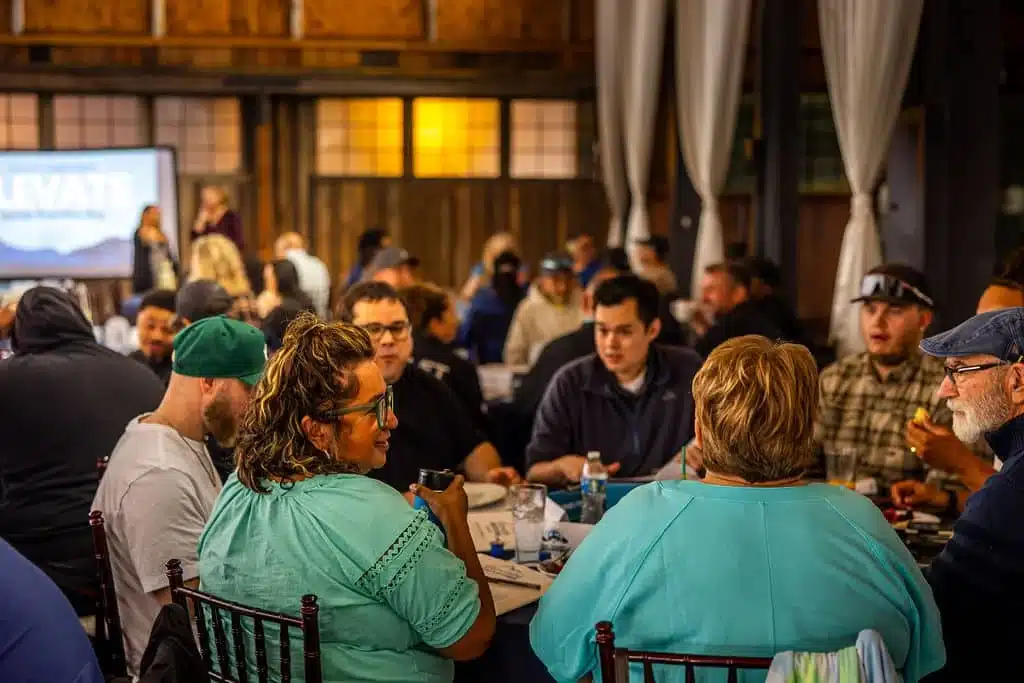
A cocktail reception leaves people moving through the room. A seated dinner does the opposite. Add speeches and dancing, and the same holiday party venue may need to work three or four different ways over a few hours.
During arrival, guests tend to gather near the bar, coat area, or first familiar face they see. If those spaces sit too close together, the entrance can feel crowded even when the rest of the venue is open.
Dinner changes the balance again. Tables need enough room for service and conversation, while anyone speaking should be visible without guests having to turn awkwardly in their seats.
Then there is the dance floor. Tucking it away may preserve dining space, but it can also make the energy feel disconnected once the music starts.
Think about how guests will move from one part of the evening to the next. The best layout often feels obvious once the party is underway, even though plenty of thought went into it beforehand.
Where Is Holiday Decor Actually Worth the Space?
Not every surface needs something seasonal.
At the entrance, a tree, wreath, or greenery can create an immediate sense of occasion. On dining tables, lower centerpieces or restrained seasonal details can add warmth without getting between conversations. Around the bar, stage, fireplace, or another gathering point, one larger arrangement can help anchor the room.
Scale matters as much as style. A centerpiece that looks modest in an inspiration photo may feel oversized once glassware, menus, and place settings are added.
The strongest seasonal details often have room around them.
For corporate holiday decor, that can be more effective than trying to carry the same amount of decoration through every part of the venue.
The Details That Are Easy to Miss Until Setup Day
Some design ideas only reveal their practical side once installation begins.
An illuminated display needs access to power. Suspended pieces may need advance approval. Candle use, hanging decor, temporary fixtures, and larger installations are all worth confirming with the venue. A decorative feature beside the bar also needs to leave enough space once a line forms.
Setup time matters too. Landmark venue rentals include time for vendor setup and installation, but more involved production may need additional planning.
These are small details compared with choosing the overall look, but they can affect where a design ultimately works best. Working with a seasoned, in-house team means none of these details are surprises and the set-up day runs smoothly.
Frequently Asked Questions
How Do You Decorate a Corporate Holiday Party Without Overcrowding the Venue?
Choose a few focal areas rather than decorating every available surface. The entrance, dining tables, and one main gathering area are often enough to establish a seasonal look while keeping walkways and service areas comfortable.
What Lighting Works Well for a Company Holiday Party?
It depends on the flow of the event. Warm ambient lighting can suit cocktails and dinner, focused lighting can support presentations or key displays, and more dynamic lighting can help shift the room toward dancing later in the evening.
Does Landmark Offer Holiday Decor and Lighting?
Yes. Landmark offers event design, lighting and audiovisual production, along with holiday decor such as illuminated trees, garlands, wreaths, centerpieces, and other seasonal accents.
Bring the Room Together
The most effective holiday spaces are not necessarily the ones with the most decorations. They are the ones where the room, lighting, and layout feel considered together.
Start with how you want guests to experience the evening, then let the venue guide what needs to be added. If you’re planning a company holiday party in Seattle, explore Landmark’s holiday party venues and see which setting fits the way your team likes to gather.